322 subscribers. 678 to go.
I took a closer look at the challenges of growing a Made for Kids channel—and made three changes.
This week, Gigi’s Treehouse Tales grew from 317 to 322 subscribers.
Five new subscribers. I appreciate every one of them, even as the pace remains well below what I need to reach 1,000 by February 1.
But my work this week went beyond publishing more videos and hoping for a different result. I evaluated my channel’s presentation, looked for patterns in my publishing data, and developed a new video series.
I also spent time examining something that deserves more attention in conversations about YouTube growth: Made for Kids channels operate with a different set of tools.
As a grandmother, I support protecting children online. Those protections matter to me personally, and they belong in the planning for any children’s channel.
They also affect how we attract viewers, encourage return visits, build relationships, and eventually earn revenue.
When the usual growth advice doesn’t fit
A lot of YouTube advice assumes you can invite viewers to comment, continue the conversation below a video, or use a clickable end screen to guide them to the next one.
On Made for Kids content, comments, cards, and end screens are unavailable. Channels designated Made for Kids also lack features such as posts and notifications. These restrictions are part of YouTube’s approach to complying with children’s privacy laws, including COPPA.
That changes the practical application of advice like “build a community.”
I can’t ask parents what their children enjoyed and expect a conversation beneath that video. I can’t add a clickable end screen that points directly to the next animal adventure.
Testing has limitations, too. YouTube’s native A/B testing for titles and thumbnails is unavailable on Made for Kids videos.
I can still revise my titles and thumbnails and evaluate what happens afterward. But changing something over time isn’t the same as testing alternatives simultaneously with comparable audiences.
The lesson for me is to evaluate growth advice before applying it. Does it fit my audience? Is the feature available? What can I measure with the tools I actually have?
Monetization deserves a closer look
I’ve also been learning more about the economics of children’s content.
YouTube does not serve personalized ads on Made for Kids videos, although other advertising can still appear. YouTube acknowledges that the absence of personalized advertising may reduce revenue for some creators.
Recently, I watched a newly monetized children’s creator share earnings of about $20.
Without knowing the full reporting period, views, or audience, I can’t use that figure to predict my own earnings. Still, it prompted an important question: what might the financial return look like compared with the work involved?
Reaching monetization will be an achievement. Building meaningful income will require more work beyond that milestone.
At the other end of the spectrum, creators such as Ms. Rachel remain inspiring. I don’t need a headline earnings estimate to appreciate what she has built or the families her work reaches.
For my own channel, I want both ambition and realistic expectations. I started creating for my grandchildren. The possibility of eventually helping with daycare, sports, and other activities still motivates me.
Three changes I made this week
My corporate background has taught me to examine a problem, identify what I can influence, and make a decision I can evaluate.
That’s the approach I’m bringing to this channel.
1. Simplifying my channel’s presentation
I’ve been studying how successful creators present their channels, including creators well outside children’s content.
One thing that caught my attention was how simple some banners and logos are—and how directly they communicate an invitation to subscribe.
MrBeast was one of the channels I looked at. My audience and content are very different, but clarity is a principle I can learn from.
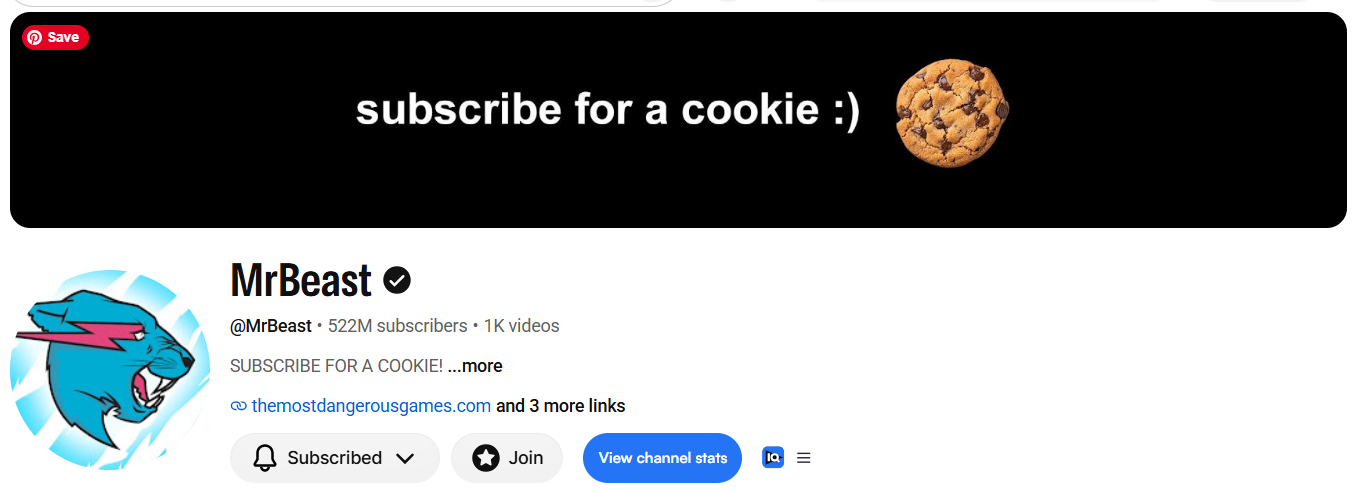
The banner on the MrBeast channel page says, “subscribe for a cookie :)” with an image of a chocolate chip cookie. So simple, yet it leaves me wondering…do I really get a cookie if I subscribe? If so, how does that work? I have so many questions!
With that said, I made adjustments to my own channel’s presentation with that in mind.
A new visitor should be able to understand what I offer without having to work through a busy design. I’ll be watching to see whether those changes help viewers recognize the channel and choose to return.
2. Using my publishing history to refine the schedule
With help from vidIQ, I reviewed the dates, days, and times of previous uploads to look for patterns.
Two stood out:
My single topic videos do really well if published on Wednesday or Fridays at 7am.
My longer compilation videos do really well if published on Sunday from 5-7pm.
I’ve scheduled new videos accordingly.
These are working hypotheses based on my channel’s results. Topic, thumbnail, video quality, and audience interest can all influence performance, so I’ll need more uploads to see whether the pattern holds.
But it gives me a more informed starting point.
For other small creators, that may be a useful exercise: separate your videos by format before comparing publishing times. A longer compilation may serve a different viewing occasion than a shorter, focused video.
3. Giving viewers a new way to participate
My third move was to develop an animal-sound guessing series.
The concept is simple: listen to the sound, take a moment to guess, and then discover the animal.
The series includes safari, farm, and wild animals.
I’m excited about this because it builds on the educational content I already make while changing how children participate. Listening and guessing give them something to do throughout the video.
It’s also a practical way to explore a new format without moving away from the channel’s purpose.
I’ll be watching how these videos perform, including whether viewers keep watching and whether the series gives families a reason to come back.
What I’m taking into Week 5
The subscriber count is moving slowly. I’m painfully aware of that.
I’m also making deliberate changes: clearer channel presentation, a publishing schedule informed by my own results, and a new interactive series.
The challenge of a Made for Kids channel is understanding its constraints well enough to build an effective strategy within them. Supporting children’s privacy and taking the business seriously can go together.
If you’re growing a small channel, my takeaway this week is to choose a specific question you can investigate.
Look at your own history.
Learn from other creators.
Make a change you can evaluate.
That’s what I’ll keep doing—and sharing as I go.
322 subscribers. 678 to go. Still creating, still testing, and still working toward February 1.
~ Amy
P.S. If you’d like to track my progress, visit my YouTube Channel, Gigi’s Treehouse