314 subscribers. 686 more to go. 120 days remain.
I set what I thought was a reasonable goal:
Gain five new YouTube subscribers per day.
I was able to do that in August. In September, I fell short. And now October is starting to trend in the wrong direction, too. At the moment, I'm barely gaining one subscriber per day.
This week I went from 308 to 314 subscribers.
A gain of six.
And to the six people out there who hit that Subscribe button this week: thank you so very much!
But six isn't 35.
If I'm going to make it to 1,000, I can't just hope next week will be better. I need to figure out what's happening.
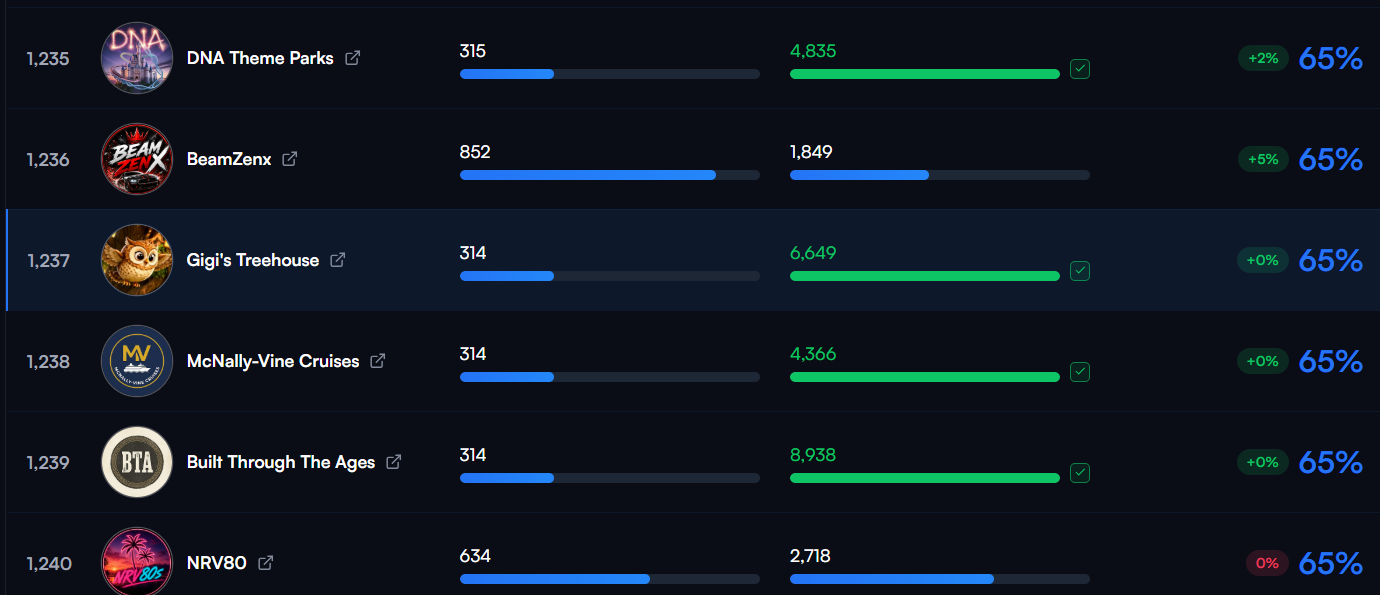
Slow progress in gaining new subscribers week over week. This is the vidIQ Race to 4K leaderboard. My channel is currently 1,237 out of 24,920 channels participating in the challenge.
So What Went Wrong?
Here's where things get interesting.
I published two of my regular Animal Names & Sounds videos this week, sticking with my normal cadence of Sundays at 4:30 PM and Wednesdays at 7:00 AM.
I was careful with the titles. I worked on the thumbnails. I paid attention to keywords and tried to maintain the consistency that has worked for me before.
And both videos received more than 1,000 views within their first 48 hours.
For a channel with just over 300 subscribers, I'm pretty happy with that.
But there's a problem.
Those views aren't translating into subscribers at the rate I need.
That's an important distinction.
Maybe my problem isn't simply getting people to watch.
Maybe it's getting the people who watch to decide:
“I want more of this.”
And Then There's My New Experiment
I've also been developing an entirely different type of children's video: an interactive Brain Break.
The idea is simple.
Instead of sitting and watching, kids participate.
Run! Jump! Dodge! Duck!
They're following adorable animated characters through an adventure while getting up, moving around, and burning some energy.
Since we're only a few weeks away from Halloween, I launched a spooky-themed version this week.
I was excited about this one.
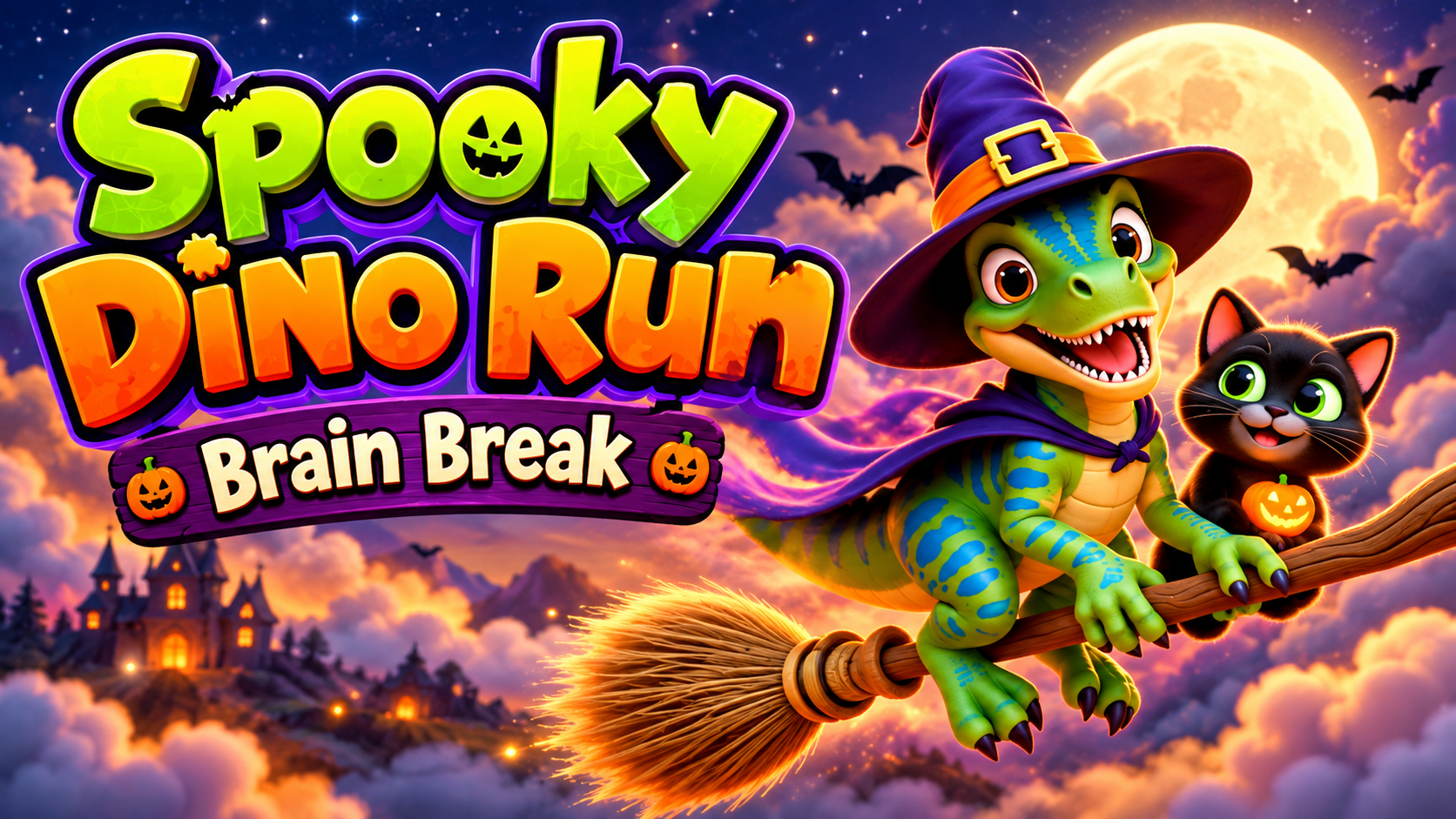
Newly Launched Spooky Dino Run Video
So far?
65 views.
That's extremely low compared with my recent animal videos.
I've shared the video with friends and family, and I've also subjected it to perhaps the most demanding focus group available to a children's content creator:
my three-year-old grandson.
He asked to watch it several times.
So I'm officially calling it Kid Approved.
Of course, one three-year-old isn't exactly a statistically significant sample size.
But it does raise an interesting question.
If the kids who actually see the video enjoy it, why aren't more kids seeing it?
Maybe I Have Two Different Problems
This is where I started thinking differently about this week's results.
My animal videos and my Brain Break may be struggling for completely different reasons.
The animal videos are getting views.
The problem there may be conversion. People are watching, but relatively few are subscribing.
The Brain Break has the opposite problem.
It hasn't received enough views yet for me to know whether it can convert viewers into subscribers.
That's a discovery problem.
And those require two very different solutions.
Simply saying, “I need more views,” doesn't tell me enough.
Let's Investigate
Rather than randomly changing things, I'm treating this week like an investigation.
First, I'm looking at successful channels producing content similar to mine.
How are they writing their titles?
What do their thumbnails look like?
How do they describe their videos?
What words do they consistently use?
How do they position their channels?
And perhaps most importantly:
Who does YouTube appear to think their audience is?
I'm not interested in copying another creator's work. But there's no reason to ignore what successful channels can teach me about communicating with an audience.
I Found One Clue in My Own Channel
That investigation brought me back to something I hadn't thought much about recently:
my channel description.
When I originally set up the channel, I looked at successful children's channels, including channels such as Ms. Rachel.
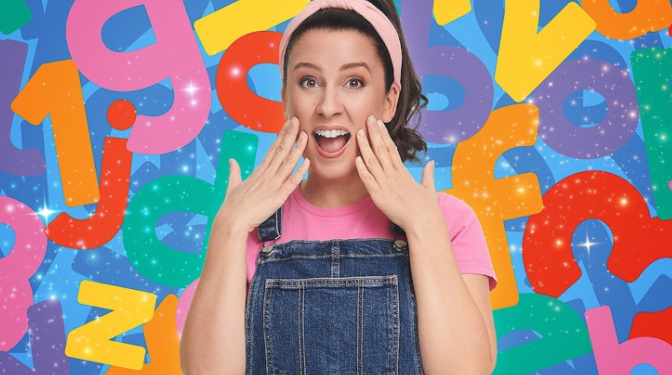
Miss Rachel, popular YouTube channel for toddlers.
Image credit: abcnews.com
One phrase stood out prominently:
“Toddler Learning Videos.”
That made perfect sense for what I was creating at the time, so I followed a similar approach in describing my own channel.
But my content has evolved.
Animal names and sounds certainly work for toddlers.
My newer Brain Break videos, however, may appeal to a somewhat broader—and potentially slightly older—preschool and early-childhood audience.
A three-year-old can enjoy them, but so might a four-, five-, or six-year-old who wants to run through a forest, jump over obstacles, dodge dinosaurs or duck underneath a ghostly creature.
So I made an adjustment.
I've started broadening some of the language around my channel and videos so that everything isn't positioned exclusively as “toddler” content.
Will that suddenly cause YouTube to send thousands of viewers to my Brain Break videos?
Probably not.
But it's a hypothesis worth testing.
I'm Also Learning Not to Change Everything at Once
This may be one of the most important lessons of Week 2.
When something isn't performing, the temptation is to start changing everything.
New title.
New thumbnail.
New description.
New keywords.
Different upload time.
Different subject.
Different format.
But if I change five things simultaneously and the video suddenly performs better, what did I actually learn?
Nothing.
So I'm trying to become more deliberate about my experiments.
Change something.
Watch what happens.
Study the data.
Then make the next decision.
That's harder than it sounds when you're staring at a video with 65 views.
For those of you familiar with UX research, this is classic A/B testing. Test one variant at a time to learn, because if you try to test multiple things at once, you really won’t know what change people are actually responding to.
YouTube offers A/B testing, but unfortunately, NOT for a Made for Kids channel. I do hope they change this rule because it would be so much easier to test and learn!
Views Aren't the Goal
This week also reminded me of something that's easy to forget when you're watching YouTube Studio analytics.
A view isn't necessarily a new member of your audience.
Someone might watch an animal video because their child wants to hear what a cow sounds like.
They get the answer.
The video ends.
They leave.
That's still a successful view—but it doesn't necessarily create a subscriber.
To reach 1,000 subscribers, I need to think beyond individual videos.
I need to give parents, grandparents and caregivers a reason to think:
“This channel consistently has things my child will enjoy. I should subscribe.”
That's a much bigger challenge than getting someone to click on a single thumbnail.
And I suspect it's going to become a major part of this Race to 1,000.
The Week 2 Scorecard
Starting subscribers: 308
Ending subscribers: 314
Subscribers gained: 6
Weekly target: 35
Remaining to 1,000: 686
Days remaining: 120
Did I hit my goal? Not even close.
But I may have learned more from missing it than I would have learned from gaining 35 subscribers without understanding why.
What I'm Testing Next
For the coming week, I'm focusing on a few specific things.
I'm going to continue publishing the animal content that has already demonstrated an ability to attract viewers rather than abandoning something that's working.
At the same time, I'm going to keep experimenting with Brain Break videos. One underperforming video isn't enough evidence to declare the idea a failure.
In fact, I launched a new one this morning and I’m hoping that as I build out a specific Brain Break playlist, there will be a greater chance of discovery.
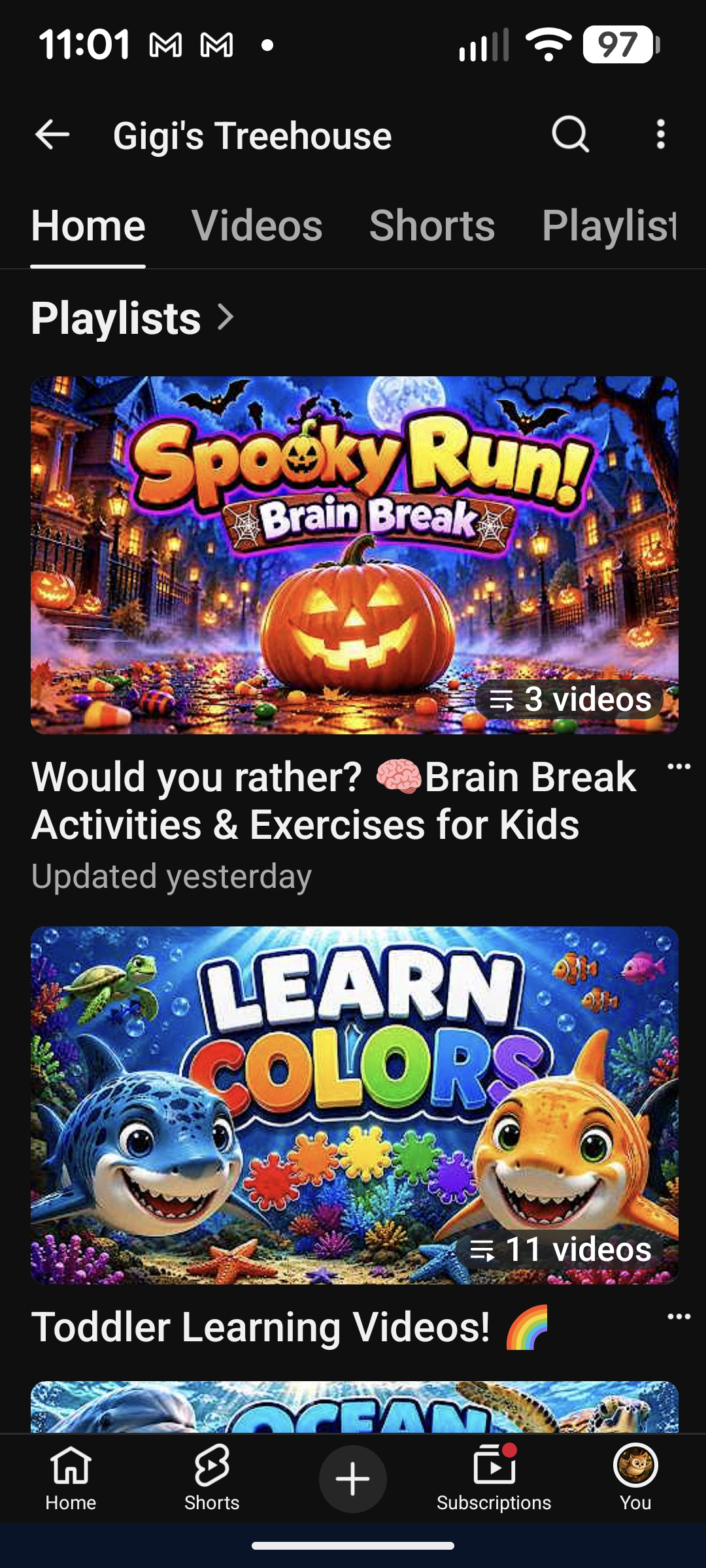
Brain Break Playlist
3 videos is definitely not enough… but it is a start!
I'm also going to study the relationship between views and subscribers, not just the raw view count.
And I'm going to pay closer attention to whether my channel's language, titles and positioning accurately reflect the audience I'm actually trying to reach today—not necessarily the audience I imagined when I started.
Most importantly, I'm going to resist the temptation to panic and reinvent the entire channel because of one slow week.
686 to Go
I'll admit it.
When I started this challenge, five subscribers per day sounded pretty reasonable.
Now I'm beginning to appreciate just how ambitious that number actually is.
But that's why I'm documenting this.
If I sail comfortably to 1,000 subscribers, great.
If I struggle all the way there, that's probably a more interesting story.
And if I don't make it by the deadline?
Then we'll know exactly what I tried, what worked, what didn't, and what I learned along the way.
For now:
314 down. 686 to go.
120 days remain.
See you next week.
~ Amy
P.S. If you’d like to track my progress in real time, visit Gigi’s Treehouse!